TL;DR
- AI visibility is not only about whether your brand appears. It is also about how your brand is described.
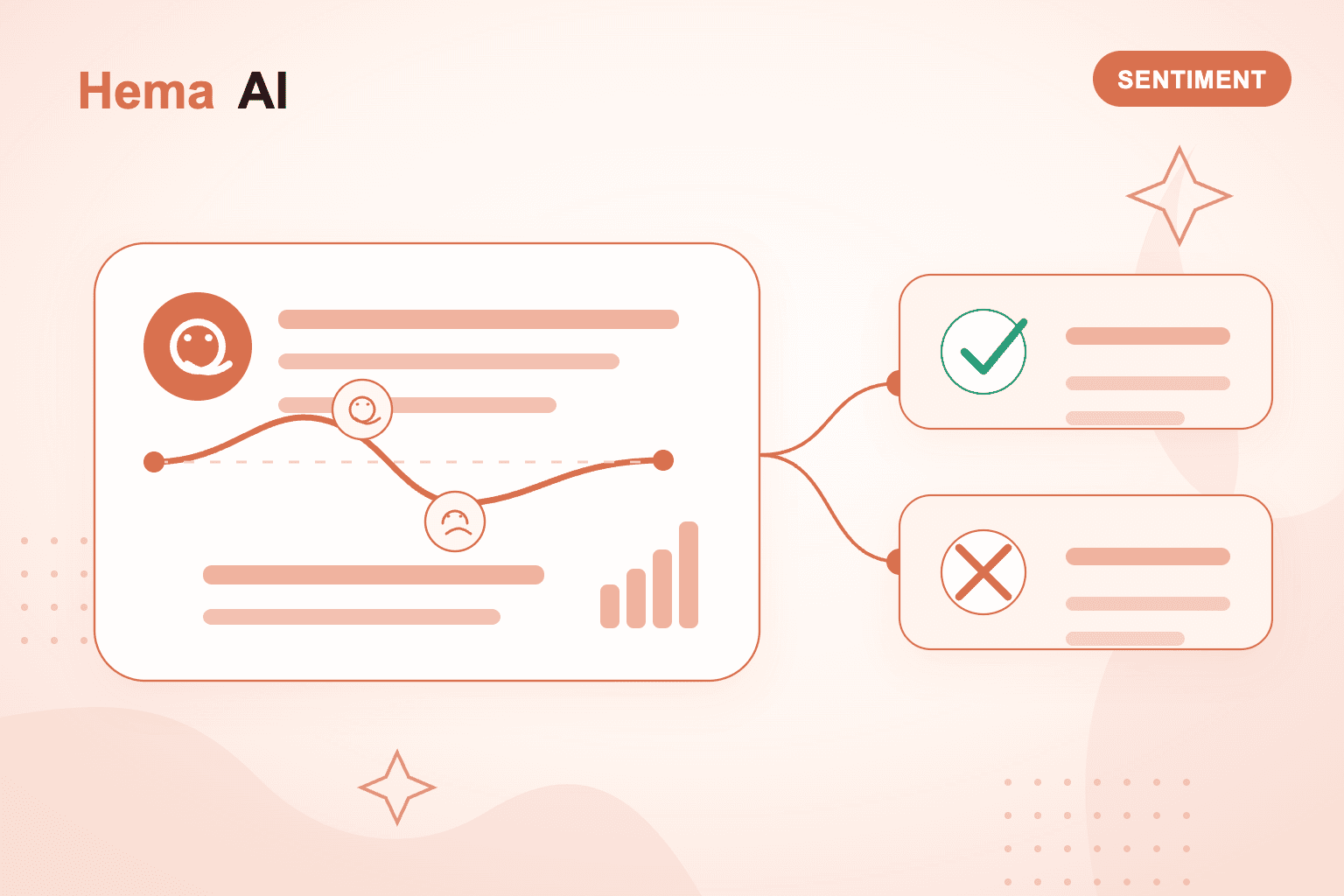
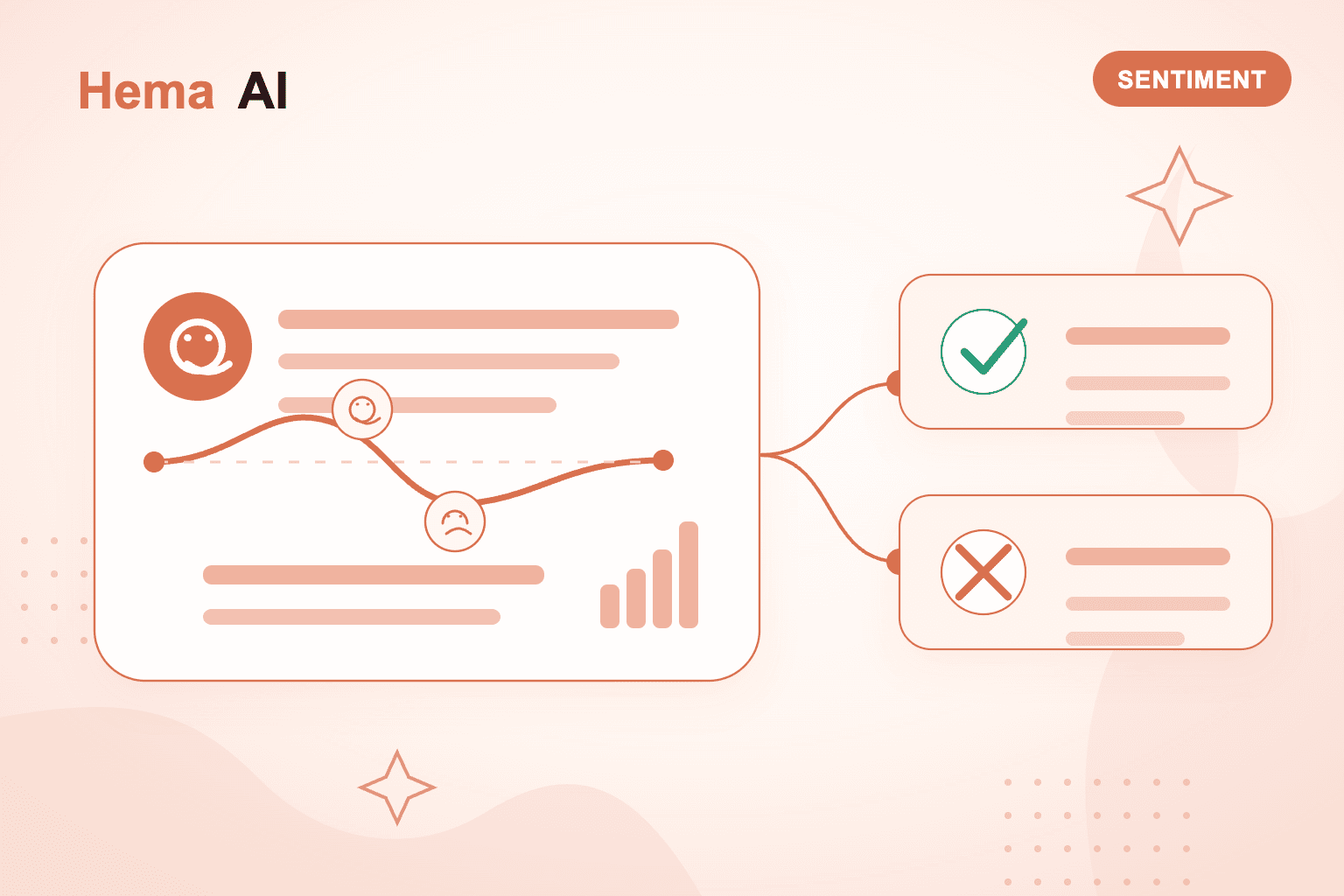
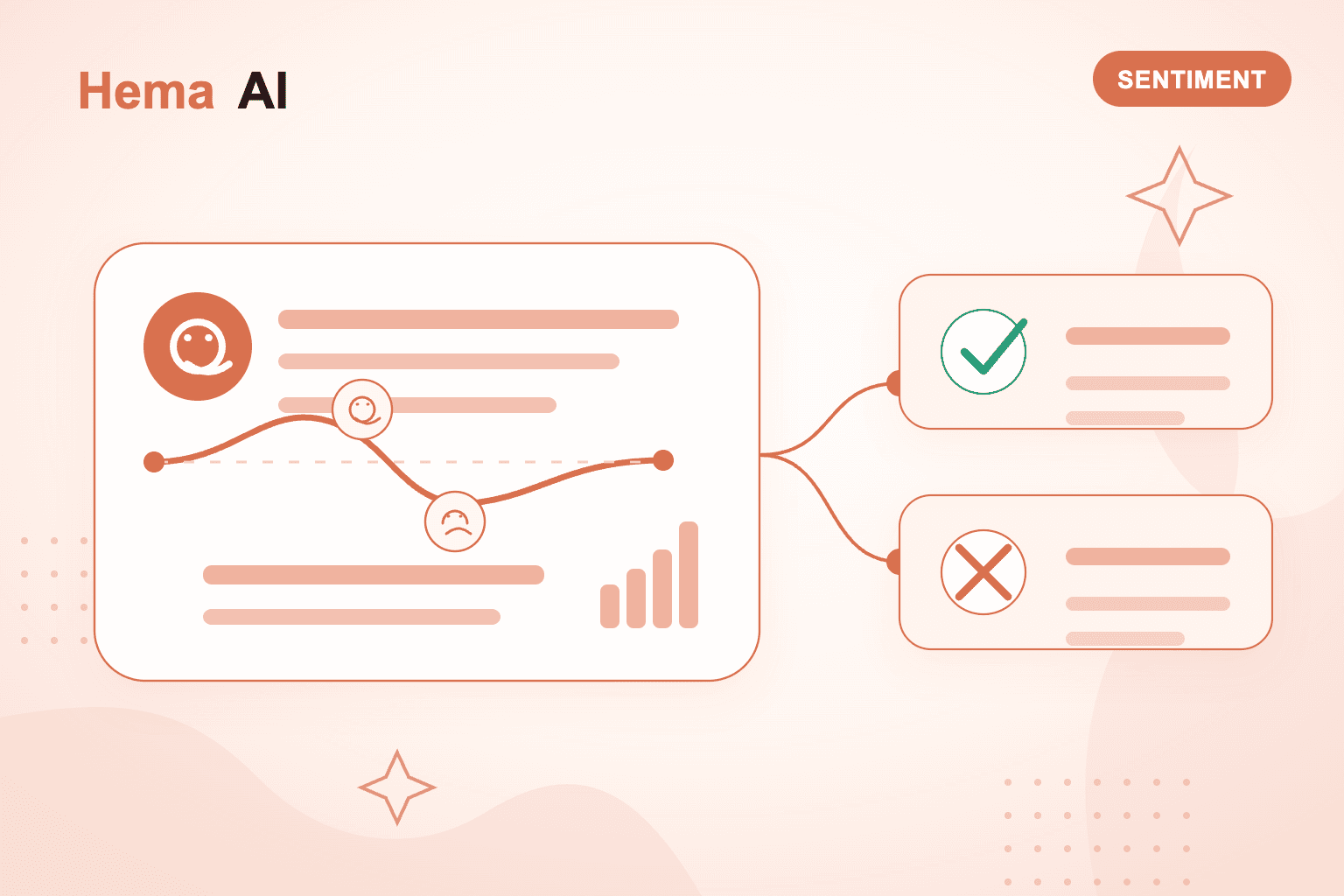
- Sentiment shows whether AI platforms describe your brand positively, negatively, or neutrally.
- Weak or negative sentiment can reduce trust even if your brand is visible.
- Sentiment can change by platform, prompt, competitor set, and cited source.
- Hema AI helps teams track sentiment, mentions, citations, sources, competitors, and share of voice from one dashboard.
“Visibility is only useful when the story is accurate. Track what AI says, which sources shape it, and where the narrative needs support.”
Why Sentiment Matters in AI Search
Most teams first ask one question:
“Does our brand appear in AI answers?”
That is important, but it is not enough.
A brand can appear in AI answers and still lose trust if the answer describes it poorly.
For example, AI platforms may describe a brand as:
expensive unclear early-stage limited poorly reviewed less trusted not suitable for enterprise hard to compare missing key features
Even if the brand appears, this kind of sentiment can influence buyer perception.
That is why AI sentiment matters.
It helps teams understand the quality of their visibility.
What AI Sentiment Means
AI sentiment is the tone or judgement AI platforms use when describing your brand.
It can be:
Positive
The answer describes your brand favorably, with clear strengths, useful positioning, or trusted signals.
Neutral
The answer mentions your brand without strong positive or negative language.
Negative
The answer highlights concerns, limitations, weak reviews, unclear pricing, missing features, or trust issues.
Sentiment is not always obvious from one phrase. It often appears across the full answer.
For example, an answer may say:
“Brand A is useful for small teams, but lacks advanced reporting.”
That is partly positive and partly limiting.
This is why sentiment should be tracked across prompts, platforms, and competitors.
How Sentiment Affects Trust
AI answers often act like summaries.
When buyers ask AI tools for recommendations, they may trust the answer as a quick evaluation.
If a brand is described with strong positive signals, the buyer may be more likely to explore it.
If a brand is described with uncertainty or weak positioning, the buyer may move toward competitors.
Sentiment can influence:
brand trust buyer confidence demo intent comparison decisions category perception investor perception partner perception media perception
For high-trust categories like financial services, healthcare, SaaS, and enterprise tools, sentiment becomes even more important.
Why Sentiment Varies by Prompt
Sentiment can change depending on what the user asks.
A brand may receive positive sentiment for:
“best tools for startups”
but neutral sentiment for:
“best enterprise platforms”
It may appear strongly for:
“affordable tools”
but weakly for:
“advanced reporting tools”
This happens because prompts create context.
The same brand can be evaluated differently depending on:
buyer type use case price expectation competitor set industry platform source base
That is why teams should not rely on one AI answer.
They should track multiple prompts.
How Competitors Influence Sentiment
AI sentiment is often comparative.
If a competitor has stronger source coverage, better comparison content, clearer pricing, or more trusted reviews, the AI answer may describe them more favorably.
For example:
“Brand A is better for enterprise teams, while Brand B is simpler for small teams.”
This kind of answer positions both brands.
If your brand is always described as “simpler” or “early-stage,” that may become the AI narrative.
Competitor comparison helps teams understand whether sentiment is absolute or relative.
How to Improve Weak Sentiment Signals
If sentiment is weak or negative, start by identifying the reason.
Ask:
Which prompt triggered the weak sentiment? Which platform gave the answer? Which sources were cited? Which competitors were mentioned? Was the answer based on outdated information? Is your website unclear? Are your pricing, features, or use cases incomplete?
Then improve the signals.
Useful actions include:
updating product pages clarifying pricing adding FAQs publishing comparison content improving source coverage creating use-case pages strengthening customer proof organizing brand facts fixing content gaps
The goal is not to manipulate AI answers. The goal is to make accurate, useful, and current information easier to understand.
See How AI Ranks Your Brand Right Now.
Run a free audit in 10 minutes. No credit card.
Frequently Asked Questions
Because visibility without trust may not help. A brand can appear but still be described weakly or negatively.
Author
Hema AI
Hema AI helps teams track and improve how their brand appears across AI search platforms.